
What is tuberculosis?
Tuberculosis, or TB, is the infectious disease that causes the greatest number of deaths worldwide. Every year, 10.7 million people are infected and 1.23 million die. Tuberculosis mainly affects the lungs. The disease is transmitted through droplets in the air, that are released when an infected person coughs, speaks or sneezes.
Symptoms:
- a lasting cough (2 weeks or more), sputum containing blood (at an advanced stage)
- loss of appetite and weight loss
- chest pain
- fever and sweating at night
- fatigue
Treatment:
Patients are given a mix of different antibiotics, for 6 months.

Tuberculosis in figures
10.7 million
people develop tuberculosis every year
1.23 million
deaths a year
88 %
chance of a cure with treatment
This is where we are active against this disease
Tuberculosis is found in every country of the world. A quarter of the world’s population is infected with dormant tuberculosis bacteria (Koch bacteria). This is asymptomatic or latent tuberculosis. 5% to 15% of them ultimately develop active tuberculosis.
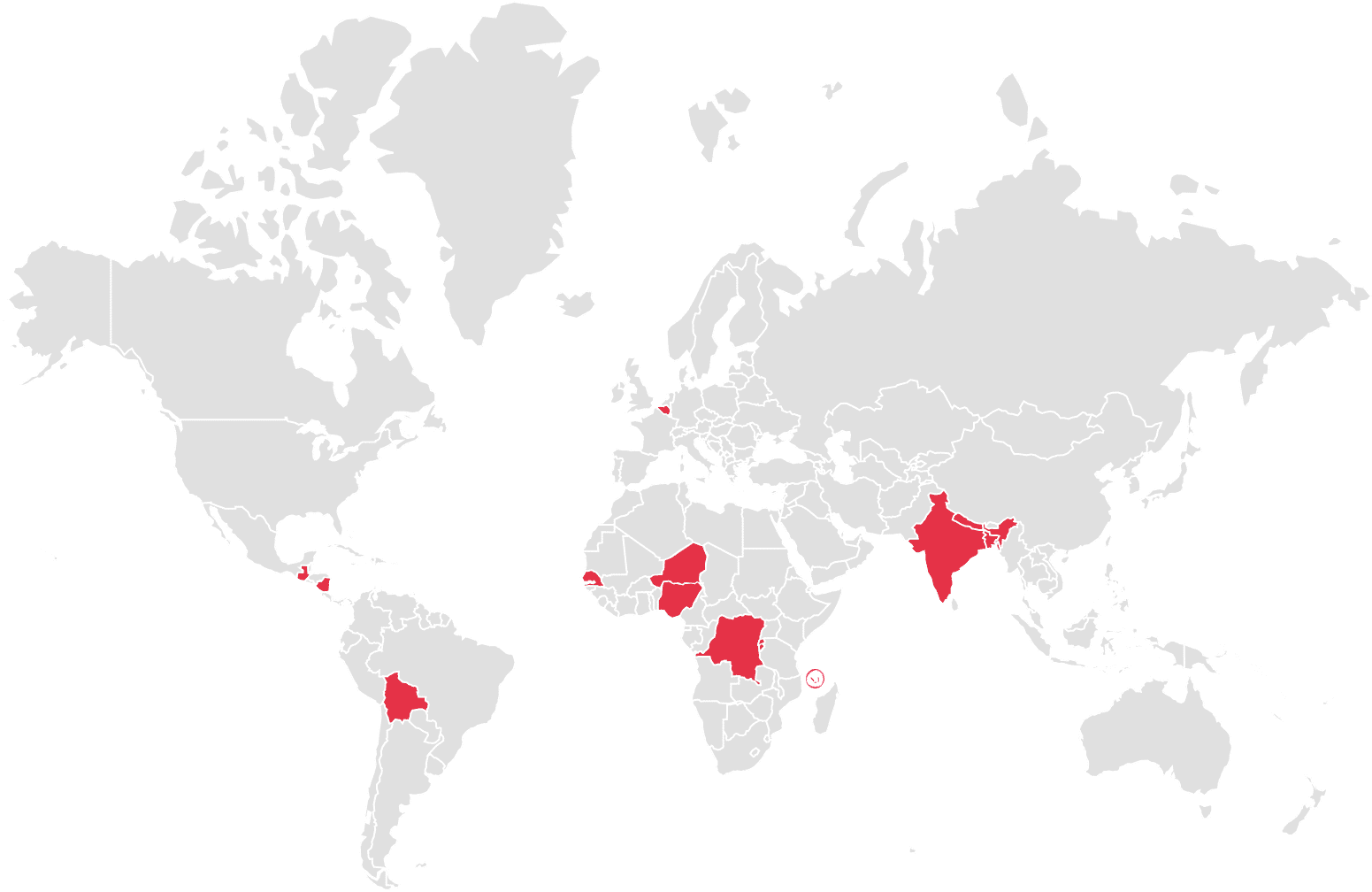
Tuberculosis in Belgium: What is Damien Foundation doing?
Every year almost 1000 new cases of tuberculosis are diagnosed in Belgium. 35% of these cases are found in Brussels. Due to the resurgence of TB in Belgium, we chose to support the tuberculosis project set up in Brussels by BELTA. Thanks to the help we provide for BELTA, homeless TB patients can be housed while they are being treated

The various forms of tuberculosis
Multi drug-resistant tuberculosis (MDR-TB)
 In addition to the ‘ordinary’ form of tuberculosis there are also more dangerous variants in which the patient is resistant to the principal tuberculosis drugs:
What is it?
You are resistant to the most effective first line tuberculosis drugs.
How does it develop?
You can develop MDR-TB in a number of ways:
– stopping tuberculosis treatment early or not adhering to it strictly enough t
– poor quality medicines
– direct contamination by an MDR-TB patient
How is it treated?
It is more difficult to treat than ordinary tuberculosis. You will be treated with second line tuberculosis drugs.
Extensively drug-resistant tuberculosis (XDR-TB)
 Extensively drug-resistant tuberculosis (XDR-TB)
 Extensively drug-resistant tuberculosis (XDR-TB)
 You are resistant to first and second line tuberculosis drugs.
How does it develop?
- You can develop XDR-TB in a variety of ways:
– stopping MDR-TB treatment early or not adhering to it strictly enough
– poor quality medicines
– direct contamination by an XDR-TB patient
How is it treated?
Even more difficult to treat. Patients receive a personalised treatment.
Bone tuberculosis and Pott's Disease

Tuberculosis primarily attacks the lungs. However, in 20% of cases, other parts of the body are also affected, such as the lymph nodes, vertebrae, kidneys, skin, and more.
In the case of bone tuberculosis, the vertebrae are attacked by the tuberculosis bacillus and can be destroyed. The disease mainly affects children. Their spinal column becomes destabilized, which can lead to fractures and exert pressure on the spinal cord. This can result in paralysis.
To prevent paralysis, the spine must be stabilized using a plaster corset around the torso. At the same time, the patient must take anti-tuberculosis medication for a period of 12 months. Affected individuals who have already become partially paralysed can partially or fully regain their mobility through physiotherapy.