Tuberculosis, leprosy and leishmaniasis
Tuberculosis, leprosy and leishmaniasis are three diseases that affect many lives worldwide. People living in poverty or on the fringes of society are at a particularly high risk of being infected.
If treated, all three of these diseases are curable. Unfortunately, patients often have little or no access to quality healthcare.
The result:
Every year millions of people die of tuberculosis and neglected tropical diseases such as leishmaniasis. Without treatment, people with leprosy develop permanent disabilities.
Tuberculosis
Tuberculosis is the world’s deadliest infectious disease. Every year, 10 million people develop active tuberculosis, and 1.23 million people die of the disease. Tuberculosis primarily affects the lungs.
It is estimated that around a quarter of the world’s population carries the bacteria that causes TB. This is latent tuberculosis. Only 5% to 15% of them develop active tuberculosis in their lifetime.
Occurence
20 diagnoses per minute
Cure rate with treatment
Leprosy
Leprosy is a chronic infectious disease. Every year around 200,000 people are diagnosed with leprosy. This disease causes life-long disabilities, leading to social exclusion. If they are diagnosed and treated in time, patients nevertheless have a very good chance of being cured.
Occurrence
1 diagnosis every 2 minutes
Cure rate
Leishmaniasis
Leishmaniasis is a parasitic disease carried by a small sandfly. The most common form in cutaneous leishmaniasis which causes chronic ulcers and deformities. Patients are excluded and stigmatised, just like leprosy patients.
Occurence
2 diagnoses per minute
Cure rate
Health programmes worldwide
Leprosy
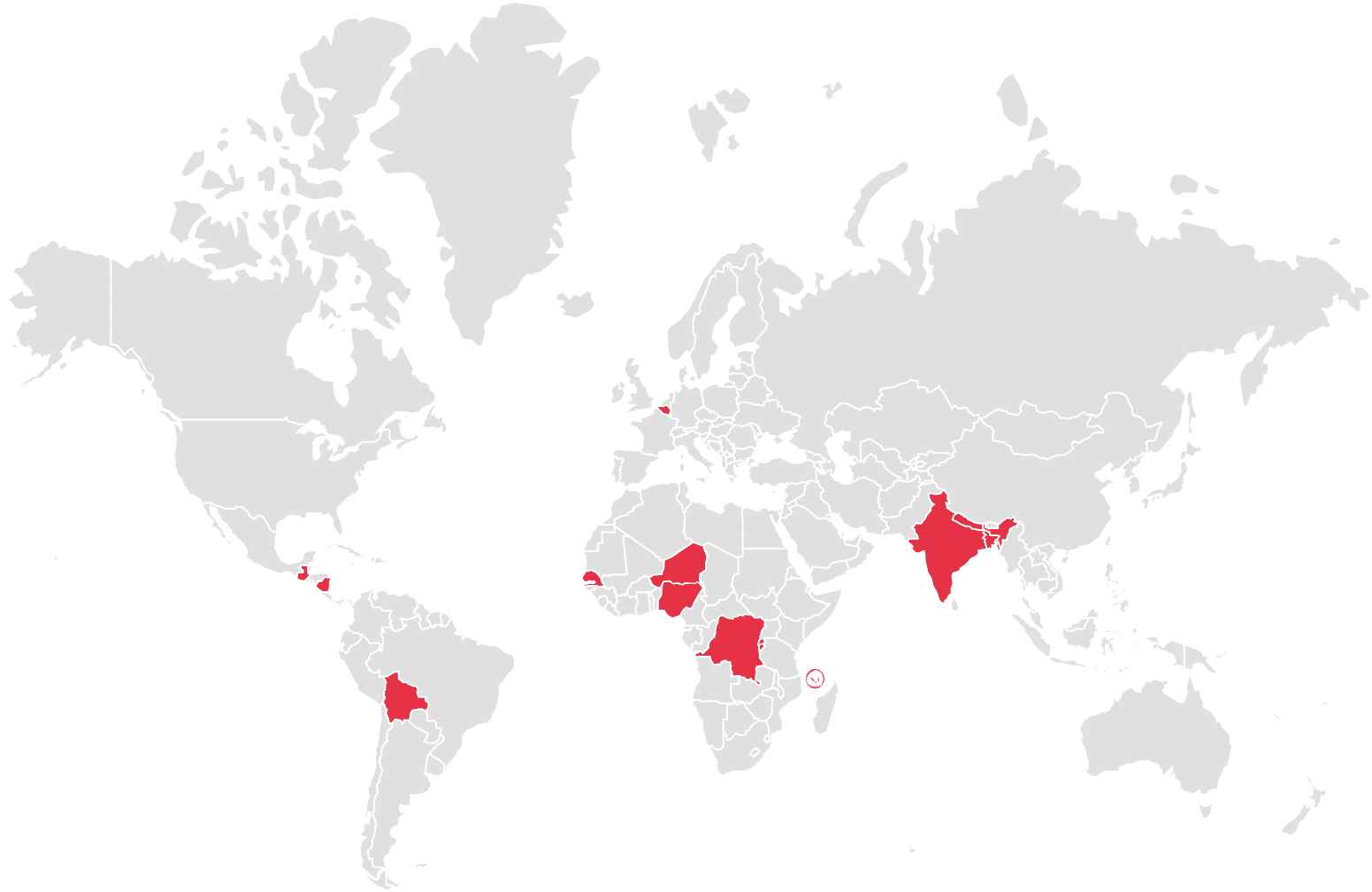
Africa
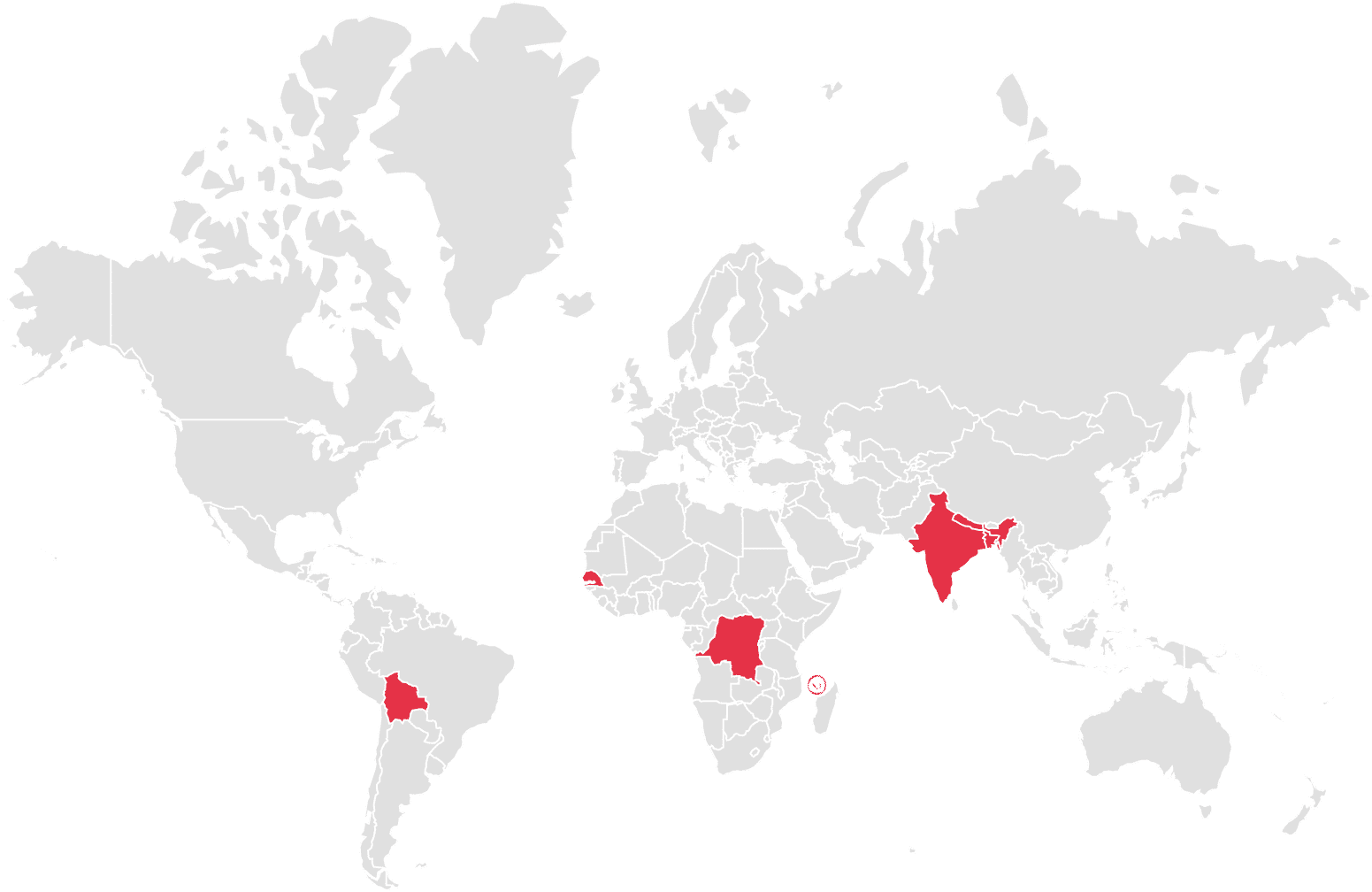
Burundi | Nigeria | Democratic Republic of Congo | Senegal | Comoros
South America
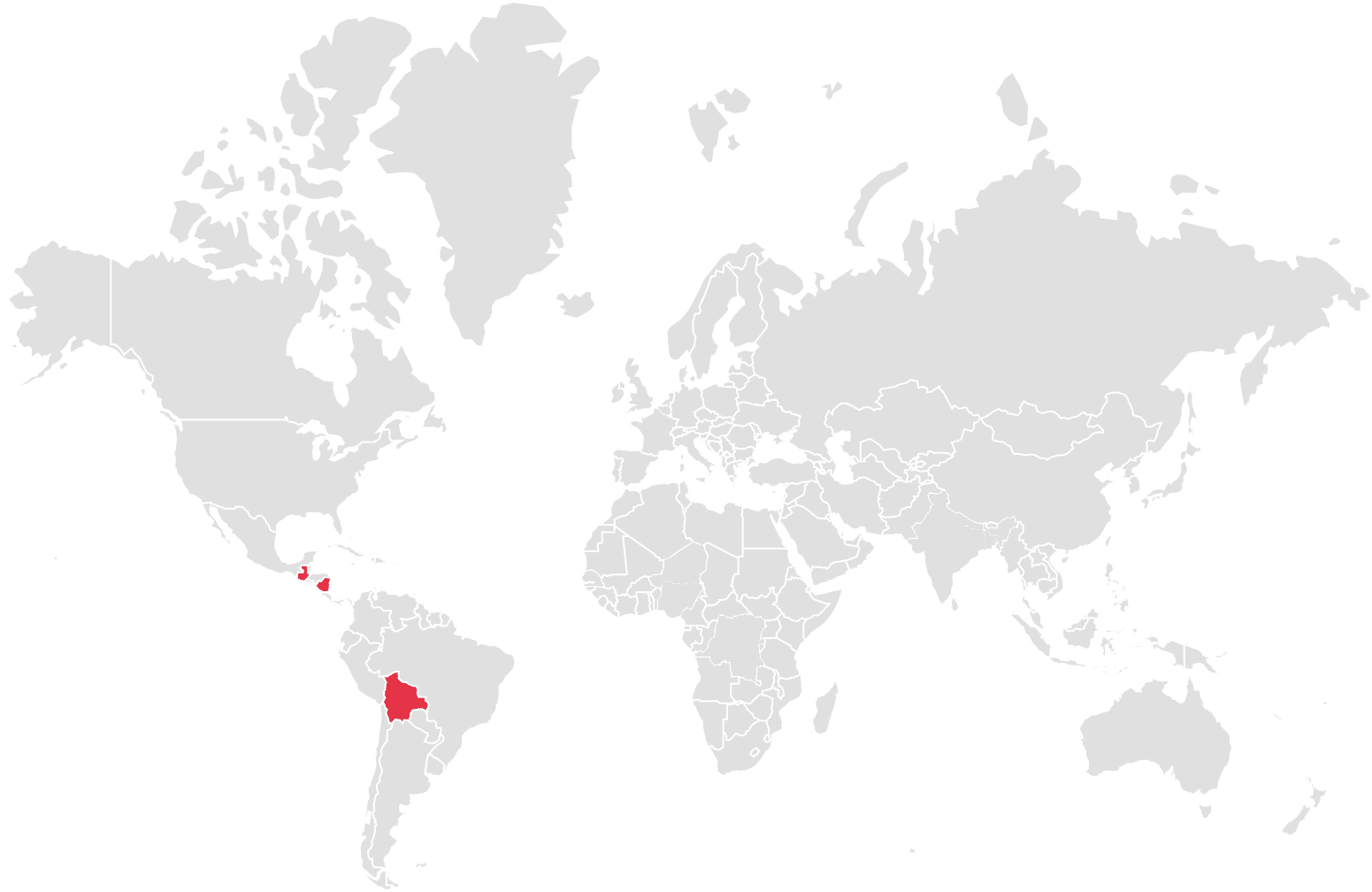
Bolivie
Asia
Bangladesh | India
Leprosy is today still present in 129 countries, principally in Africa and Asia. Half of all leprosy patients live in India.