
What is leprosy?
Leprosy is a chronic infectious disease that affects the skin and peripheral nervous system. The disease results in disabilities, stigmatisation and social exclusion. Every two minutes, somebody learns that they have been infected with leprosy. That makes more than 200,000 people a year. Leprosy is transported by tiny droplets when exhaling, coughing or sneezing. Leprosy is not generally fatal, but it can cause permanent disabilities, such as clawed hands, blindness or a loss of sensation in the fingers and toes.
The disease also has a major psychological impact on patients. They are subject to discrimination and exclusion and therefore fear a diagnosis. They try to conceal their symptoms and do not seek medical help. But the longer treatment is delayed, the worse the disabilities and greater the risk of stigmatisation and discrimination.


First symptoms:
- pale or numb areas on the skin
Principal consequences:
- damage to the nervous system
- sores and open wounds due to the numbness
- clawed hands
- stubby hands and feet
- drop foot
- paralysis of the hands, feet and eyelids
- deformities
- blindness
Some figures:
Every 2 minutes
somebody is diagnosed with leprosy
3 million
are permanently disabled and/or discriminated against
in more than 120 countries
leprosy is present
Treatment
- Patients are prescribed a mix of antibiotics. The duration of treatment varies between 6 and 12 months.
- Wound care
- Reconstructive surgery if the patient suffers from clawed hands, dragging feet or paralysed eyelids
- Physiotherapy

This is where we are fighting the disease
Leprosy is present today in more than 120 countries, principally in Africa and Asia. Half of all leprosy patients live in India.
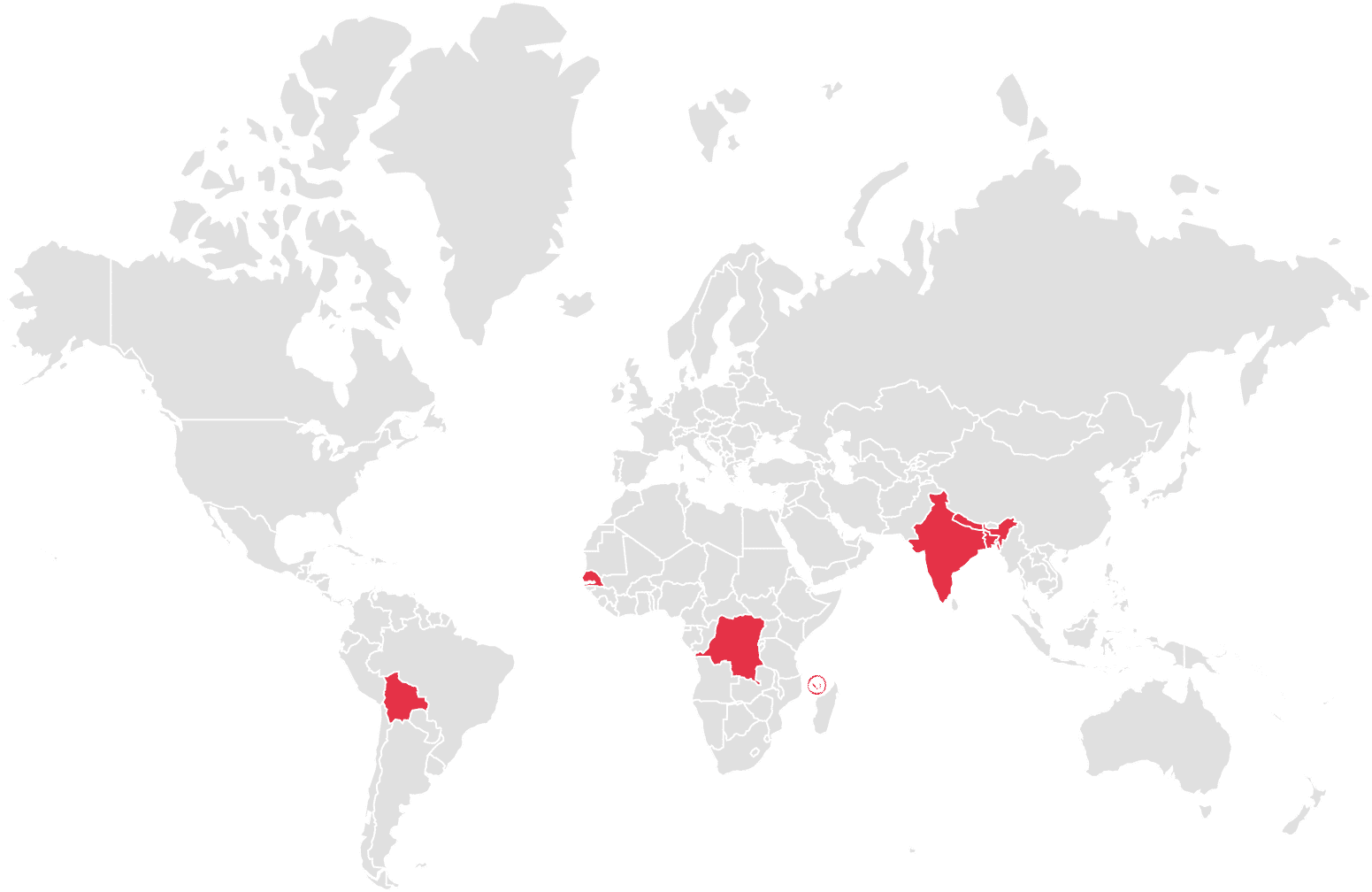
Africa
Burundi | Nigeria | Democratic Republic of Congo | Senegal
South Amercica
Bolivia
Asie
Bangladesh | India
To learn more
What deformities can appear?
 Drop foot: When the peripheral nervous system is damaged in leprosy patients, a problem occurs in the muscles that raise the foot when walking. Patients start to drag their feet as a result.
Clawed hand: Leprosy can damage the nerves, resulting in a muscle paralysis. The fingers bend and become rigid with a clawed appearance. At first this clawed hand is supple, but over time it becomes rigid. As a result, patients sometimes lose the use of their hands.
To help people with drop foot or clawed hands, out teams intervene surgically. We undertake restorative surgery to straighten the fingers in a supple clawed hand and to restore the muscles for a drop foot. Physiotherapy sessions can then help patients to get optimal use of their hands and feet again.
What forms of leprosy are there?
 There are two forms of leprosy:
Multibacillary leprosy
– Contagious, large number of bacilli, more than 5 lesions
– Treatment: a cocktail of antibiotics for 12 months
Paucibacillary leprosy
– Low risk of contamination, small number of bacilli, maximum 5 lesions
– Treatment: a cocktail of antibiotics for 6 months
Why are leprosy patients stigmatised?
 Leprosy is not fatal, but it does cause permanent deformities. Ulcers, clawed hands, paralysis of the hands and feet, blindness, etc.
People with leprosy are often unable to conceal their disease and are excluded by friends and family. Leprosy patients are confined due to false ideas about the disease. They believe that leprosy is a punishment from God, a curse, extremely contagious, fatal.
If you have leprosy, you not only lose your social network but also your job and income and consequently your place in society. There are still many laws in force around the world that discriminate against people with leprosy.
Some figures:
 50% of people with leprosy suffer mental health problems such as depression or anxiety, the result of the discrimination and prejudices they face.
In some countries, people with leprosy are not allowed to go to school, get married, work, or vote. You can find an overview of the 139 laws discriminating against leprosy online. En Belgique, la dernière loi discriminant la lèpre a été abolie en 2003 : « Interdiction de travailler dans le service militaire pour les personnes atteintes de la lèpre. »